
Lions, cheetahs, elephants, leopards, zebras, gorillas, turtles, and fish eagles. Africa has some of the most unique wildlife on the planet. What’s more is that most of these animals are part of the continent’s biggest spectacles. Millions of wildebeest migrate across the land, avoiding hungry predators. Elephants use their trunks as snorkels to cross deep rivers, while millions of sardines travel across the ocean in a long, circular formation.
Here are 10 wildlife spectacles in Africa that every traveler should include on their bucket list:
1. The Great Migration
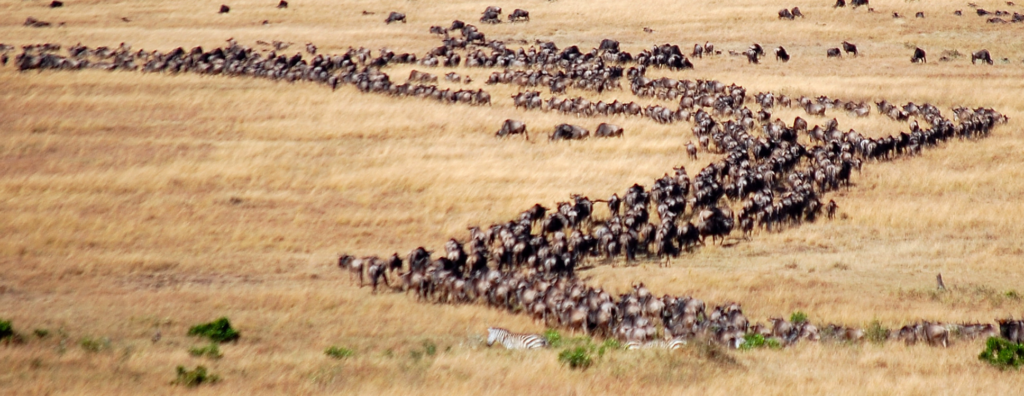
Known as the greatest show in the natural world, this wildlife spectacle sees millions of wildebeest, along with large numbers of zebra, gazelle, and other antelope species, journey from the Serengeti in Tanzania through the Masai Mara in Kenya and back again in a clockwise loop. They follow this route in search of fresh grass and water while avoiding groups of hungry predators. Some of the biggest highlights of the migration include river crossings, calving season, and predator-prey action.
2. The Sardine Run
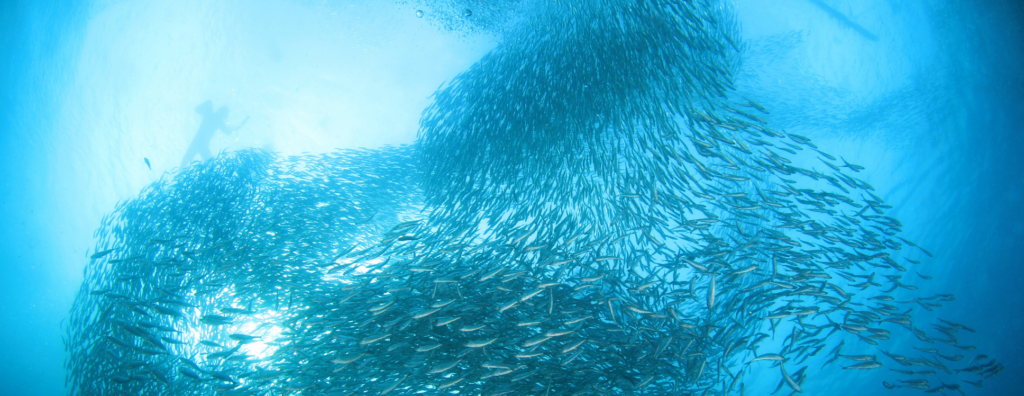
If you think migrations apply only to land animals, think again. Beneath South Africa’s coast, millions of sardines swim side by side in a unique formation. The formation constantly changes shape. Sometimes it’s a round, circular ball; other times it looks like a long ribbon stretching across the ocean. What’s interesting is how the shoal moves together in perfect sync. It’s almost as if there is one mind controlling the entire school. The sardines follow the current, migrating north from the Agulhas Bank off the Eastern Cape coast, past the Wild Coast, and into KwaZulu-Natal’s waters. Why do they migrate? Many factors are at play here, as the Sardines seek cooler water temperatures, nutrient-rich water upwellings, and food. The run attracts many predators, such as sharks, dolphins, seals, whales, and seabirds, who punch right through the school, emerging with a bite or two. Other predators simply stand next to the formation and begin chomping on whatever comes their way.
3. Gorillas in the Mist
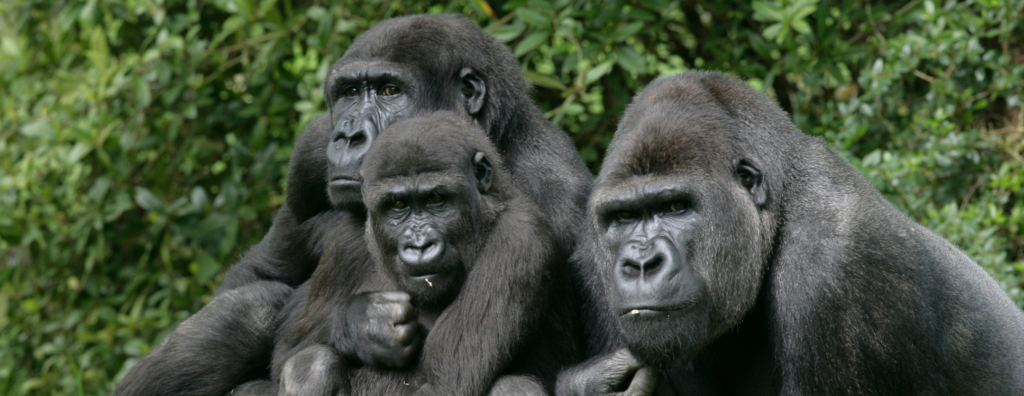
The misty rainforests of Rwanda and Uganda are home to the iconic mountain gorilla, the primate species that famous primatologist Dian Fossey studied. They are among the largest great apes, reaching up to 6 feet tall and weighing up to 400 pounds. They survive on a diet of greens and fruits, are highly intelligent, family-oriented, and live at high altitudes. Travelers can witness these creatures in their natural habitat during a gorilla trekking excursion through the steep, mountainous, and forested paths.
4. Southern Right Whales Visit the Shore
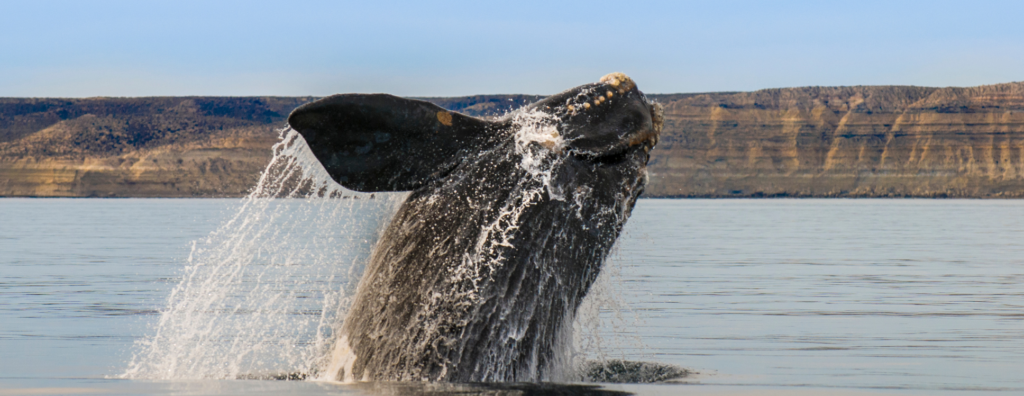
Every year, southern right whales travel thousands of kilometers from Antarctica to the warmer coastal waters of South Africa to mate, give birth, and raise their young in an ideal environment. Many of them come exceptionally close to shore (as close as 5 meters), making it easier to watch one of the ocean’s giants from land. They’re usually quite active: lifting their heads out of the water, slapping their tails into the air, and the iconic breaching, where they leap fully out of the water before crashing back down with a huge splash. For an even closer look, many vessels sail out to sea to watch them glide with their calves.
5. Elephant River Crossing
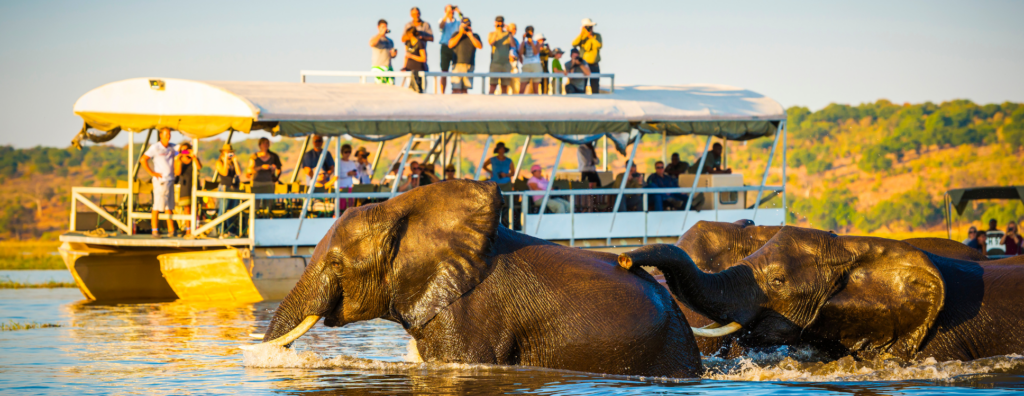
The Chobe region, which stretches between Botswana and Namibia, is home to Africa’s largest elephant population, with estimates ranging between 50,000 and over 100,000. Many of these elephants can be seen along the Chobe River drinking water, bathing, and swimming. But one other unique activity that has travelers in awe is when these giants cross the river. Usually done in groups, the herd lines up behind the matriarch in a tight formation. The calves are sandwiched between adults for protection. The elephants use their legs to paddle, and their trunks act as a snorkel once they’re fully submerged in the water. They maintain physical contact (staying close together and touching each other with their trunks) throughout the crossing. The aim of these crossings is to reach one of the river’s many islets or the opposite bank for better feeding grounds.
READ RELATED CONTENT: The Many Faces of Guides in Southern and East Africa
6. Tree-Climbing Lions
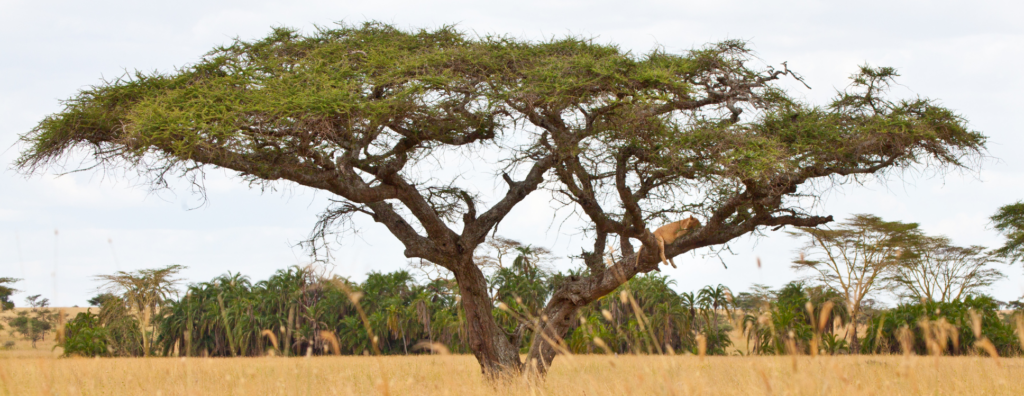
Climbing trees is not really a common trait for lions. But in certain parts of Africa, seeing a lion perched in an acacia or baobab tree is the norm. This unusual wildlife moment can be witnessed mostly in Tanzania (Tarangire National Park and Lake Manyara National Park). If you’re lucky, you may be able to see this in Kruger National Park (South Africa) or the Serengeti (Tanzania). So, why do lions climb trees? There could be a variety of reasons: to stay cool from the sweltering sun, avoid bugs, or steal meals from leopards.
7. The Flamingo Migration
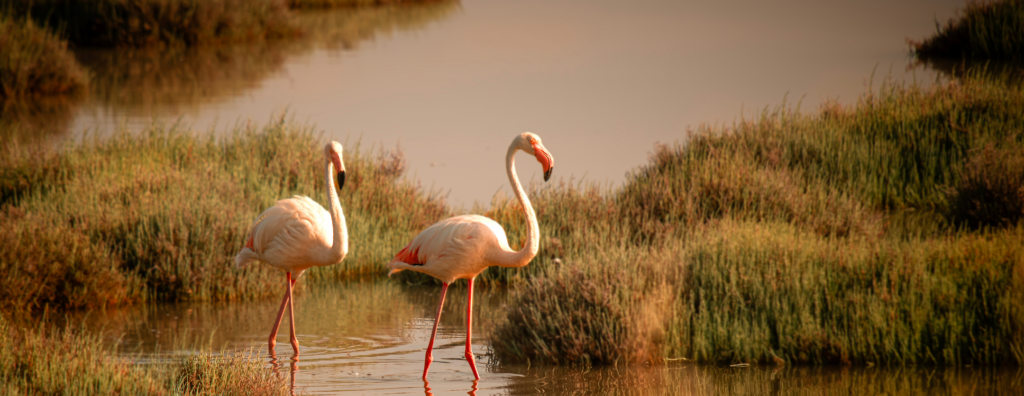
Africa is also a popular birding continent, with one of the greatest birding spectacles being the flamingo migration. Witness millions of long-necked avians sweep across the lake waters, decorating it in hues of pink. Two flamingo species are found in Africa: the lesser flamingo (smaller and deep pink) and the greater flamingo (larger and pale pink to white). Both species migrate to different parts of Africa, seeking blue-green algae and plankton which thrive in alkaline lakes. In East Africa, the flamingos travel to numerous lakes within the Great Rift Valley. Popular sites include Lake Nakuru National Park (Kenya), Lake Manyara (Tanzania), and Lake Natron (Tanzania). Popular sites in Southern Africa include Makgadikgadi Pans (Botswana), Etosha Pan (Namibia), and Walvis Bay Lagoon (Namibia).
8. African Fish Eagles Capturing Prey
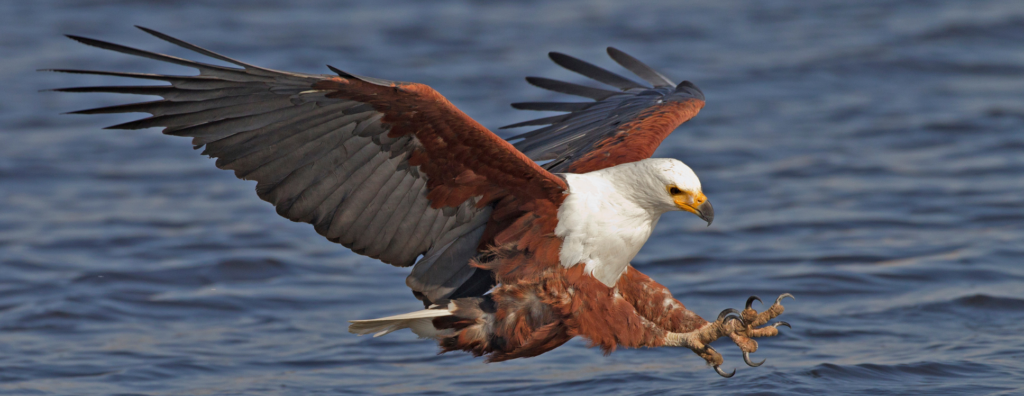
The cherry on top of most birdwatching excursions is encountering an African Fish Eagle leaping from a tall tree. As it approaches the surface of the river, it begins gliding steadily before driving its powerful talons into the water. A split second later, its talons burst back into the air, grasping a giant fish as the eagle lets out a distinct call that echoes over the river. The African Fish Eagle can be found across much of Southern Africa, including South Africa, Zimbabwe, Botswana, Namibia, Zambia, as well as in East African destinations such as Tanzania and Kenya. It thrives around lakes, rivers, and wetland areas.
9. Turtle Nesting and Hatching
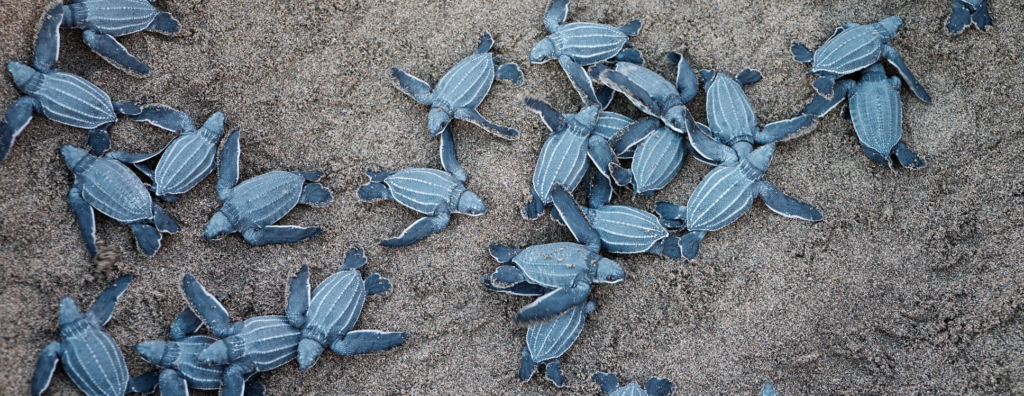
For some creatures, the action takes place in the dead of night. Surprisingly, this includes sea turtles. Under the cover of darkness, a female turtle emerges from the ocean to lay her eggs. Interestingly, this is the same beach where she was born years prior. The female digs a deep nest chamber above the high-tide mark in the sand. She then lays more than 100 soft-shelled, oval eggs. After laying, she carefully fills and covers the nest with sand, ensuring that it’s camouflaged from predators. With her task now complete, she returns to the ocean and provides no further care. The eggs remain in incubation for a few weeks before the hatchlings emerge from the sand. They make their way toward the ocean in a race against time, avoiding predators and the risk of dehydration. Several species of sea turtle nest in Africa. Loggerhead and leatherback turtles are common nesters in South Africa and Mozambique, while green turtles frequently nest in Zanzibar.
10. Botswana's Two Zebra Migrations
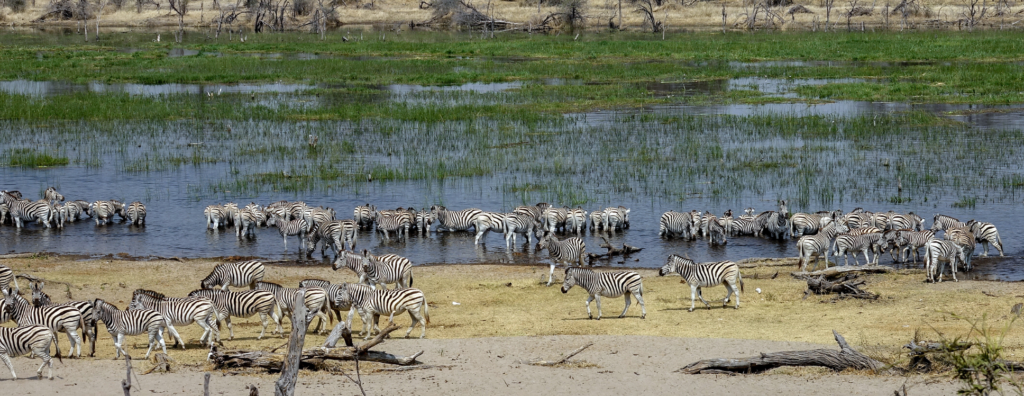
Botswana plays host to two major zebra migrations. Both migrations involve thousands of zebras traversing the lands in search of greener pastures. The Chobe-Nxai Pan zebra migration sees over 20,000 zebras journeying from the Chobe River to Nxai Pan National Park in early December. They travel in a straight line for two to three weeks before arriving at Nxai Pan. The zebras remain here for 3 months (December to February) before venturing back to the Chobe. However, the route back is much longer, taking up to 3 months (March to May). The second migration is called the Okavango-Makgadikgadi zebra migration. Here, 15,000 zebras travel from the Okavango Delta to Makgadikgadi Pans and back. The first phase of the migration begins in November/December, with only a few weeks of travel to get to Makgadikgadi Pans National Park. Like the previous migration, the zebras remain here for 3 months (December/January to February/March) before heading back. Expect fascinating interactions between the zebras, gorgeous landscapes, and thrilling predator/prey action.
Expect the Unexpected
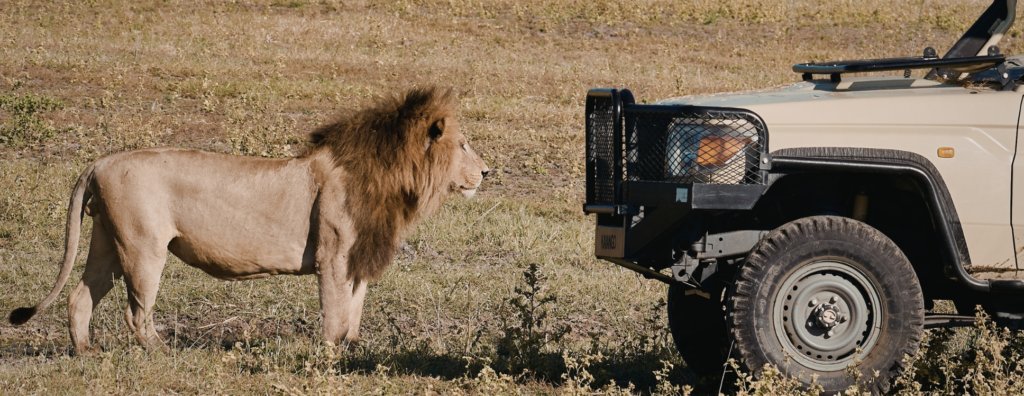
You’ll be captivated by how each spectacle unfolds in ways you least expect. This is the very essence of Africa’s wildlife: adaptable, resilient, and unpredictable.
So, what are you waiting for? Slip on your finest walking shoes, grab your binoculars, don your hat, and let the fauna of Africa take you on thrilling adventures across the bush, savannah, and ocean.
READ RELATED CONTENT: Behind the Curtain: How A GILTEDGE Journey Is Created